With the appointment of St. Goar as the county seat and the introduction of steamship travel and rail transport in the 19th century, the city’s responsibilities and importance in the administrative and transport sectors increased. The limited space of the historic city center was no longer sufficient for further development, so land beyond the old city walls was opened up.
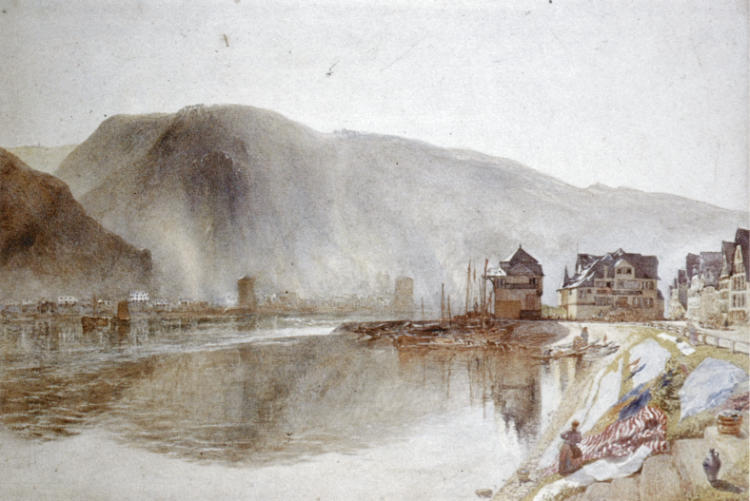
The flat terrain located west of the city, where livestock markets were held on Goarstag, the 6th of July, since the Thirty Years‚ War; this was once used by French troops as a rallying point; the name ‘Pour appell’ led to the name Porpel. In front of this square was the Bleichwiese, which descended towards the Rhine and was used for laundering clothes. Downstream, the old city harbor, the Rheinfelshafen, was built.
In the second half of the 19th century, Bleichwiese and parts of Rheinfelshafen were filled in and leveled. This created space for the construction of the town hall and other government buildings, as well as for the expansion of the Rhine promenade.
The new town hall of St. Goar, built in 1881 with elements of late Gothic and German Renaissance style, was the first building on the newly developed site. With its cruciform plan, it is one of the most important brick buildings in the city.