
Some of the houses in Grebelgasse once had Jewish owners, which is why the street was called Judengasse until 1935. As everywhere on the Middle Rhine, until the modern era Jewish citizens were assigned their own residential areas. Over time, the fixed residential structures dissolved. At the end of the 18th century, the acquisition of houses outside the Judengasse was common, as is known from a document of Landgrave Wilhelm IX from 1792 about the purchase of houses with Jews.
The oldest house in today’s Grebelgasse dates back to 1780. It was built by the Christian merchant Wilhelm Herff from St. Goar. From the end of the 19th century until 1942, it belonged to the Jewish family of Leopold Meyer. The legitimate heirs returned to Germany after the Second World War from exile in France or Israel and sold the house in 1952. Today, there are no more signs of the Jewish residents in the street.
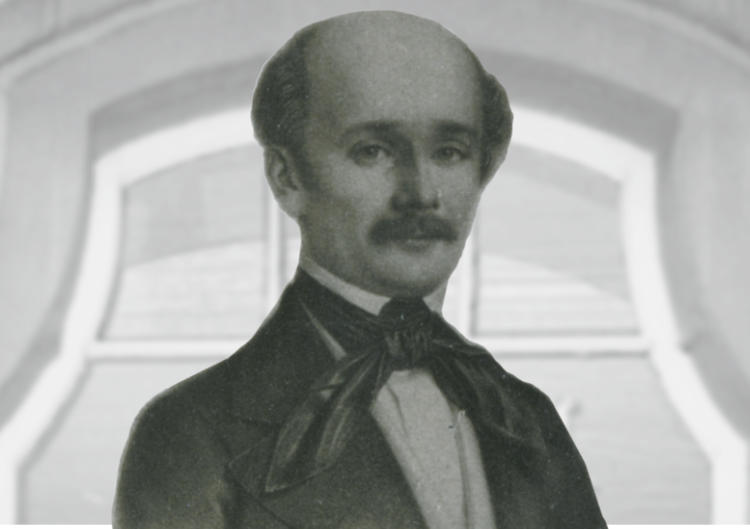
She is now Alexander Grebel (1806 – 1870) Dedicated to the memory of his father. Grebel was a politician, a local historian and a peace mediator. In the years 1844 and 1848, Grebel wrote two books that are still considered to be among the most comprehensive sources on the history of the city of St. Goar: „Schloss und Festung Rheinfels” and „Die Geschichte der Stadt St. Goar”. He donated the proceeds from the sale of these books to the city’s poor. As a member of the St. Goar district council, Grebel represented the interests of his Rhineland homeland in the Berlin State Parliament.