
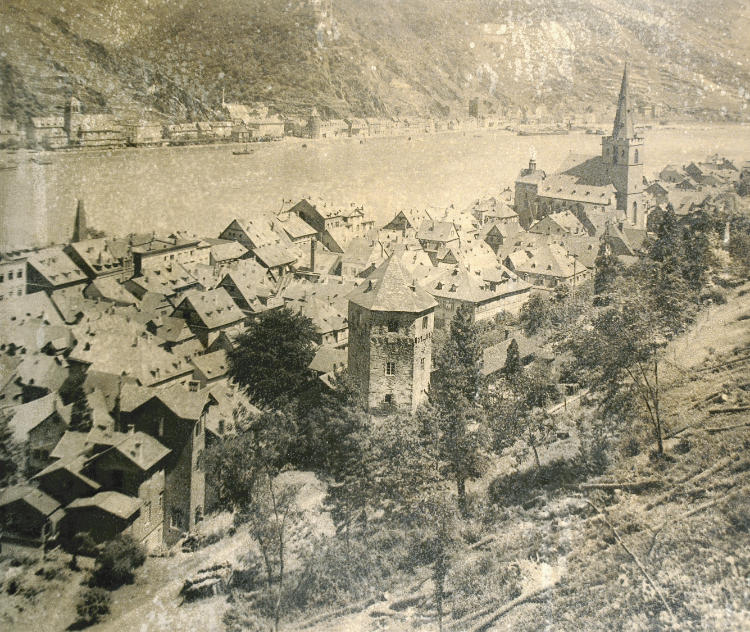
Due to its strategically advantageous location, St. Goar already held great importance in the Middle Ages. To secure their rule, the Counts of Katzenelnbogen presumably surrounded the city with a city wall in the second half of the 14th century. The city fortifications included eight towers and were connected to the Rheinfels Castle by a defensive wall. The hillside above the market square was secured by two towers located close to each other, the Chancery Tower and the Powder Tower. From their elevated position, they also provided a view of the Rhine valley.
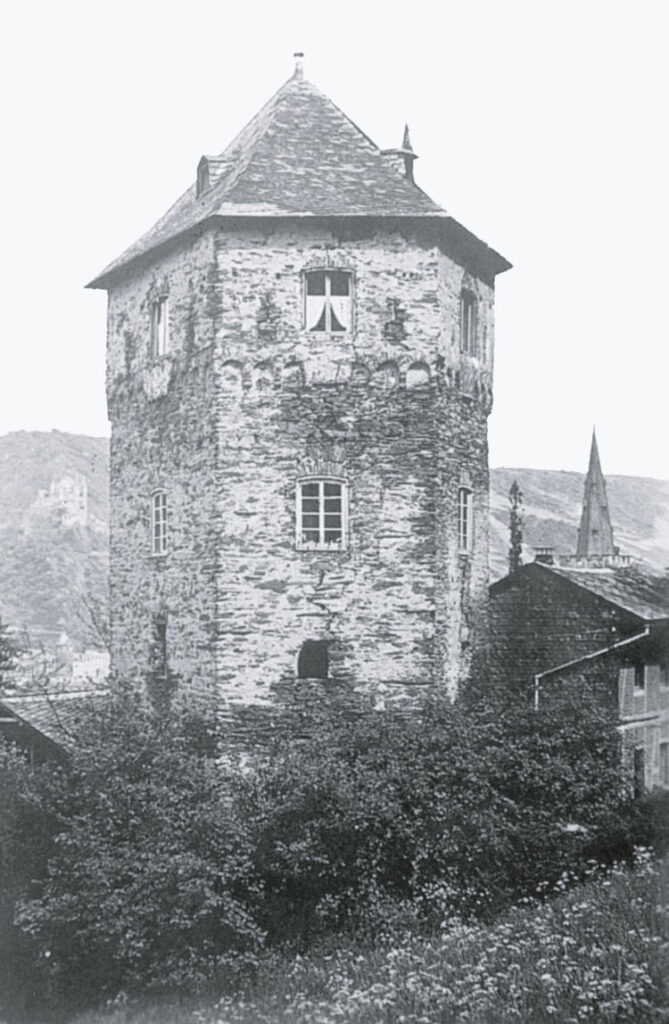
The pentagonal office tower, consisting of four floors, took an angular position within the city wall. In it, the Chancellor of Rheinfelden had his seat; he conducted the administrative affairs of the count for a long time. The lower rooms of the tower served as a prison.
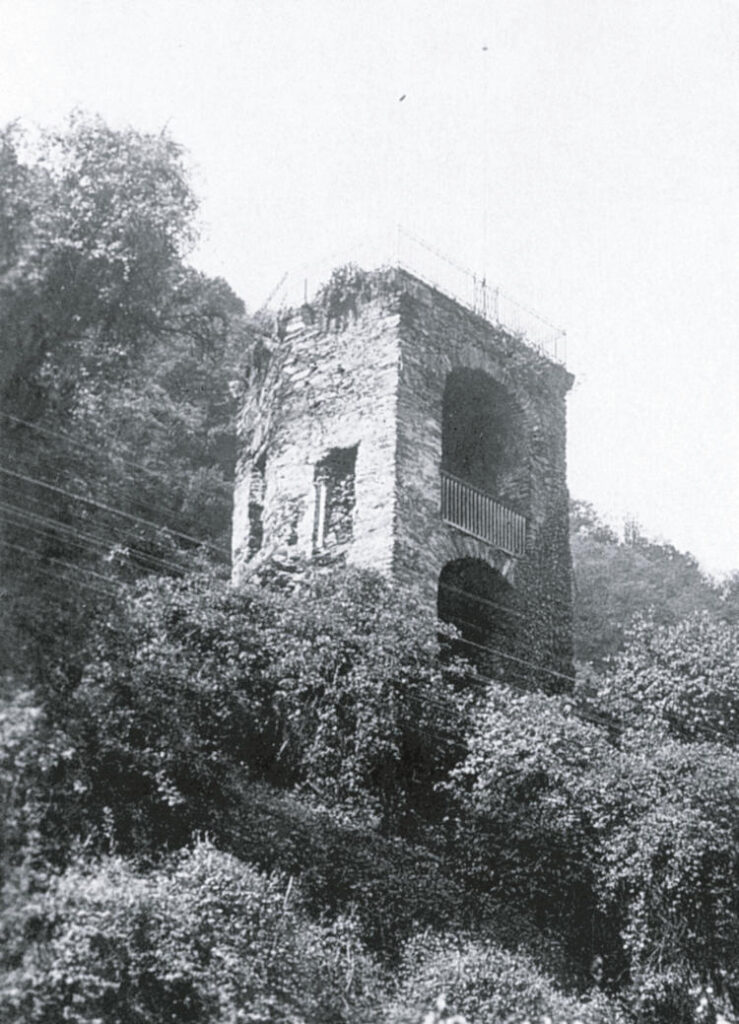
The five-story powder tower has a hexagonal structure over a round base with expansion openings. It probably served to store gunpowder among other things. Allegedly, witches were also kept in it, which is why it is known in the St. Goar population as the Witch Tower.
While the Chancery Tower largely survived the battles and storms of the time without damage, the Powder Tower has almost completely fallen into disrepair over the centuries; it was only rebuilt after 1960. Today, both towers are occupied.