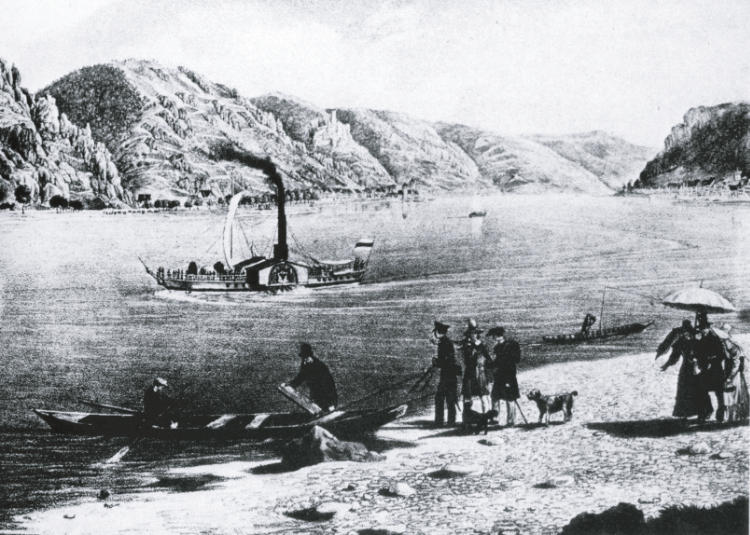
For centuries, the book-like natural banks of the Rhine on the western outskirts of St. Goar served as a landing place for ships – the last stop before the dangerous stretch of the Rhine between Loreley and Binger Loch. The first steamships, which regularly sailed on the Middle Rhine from 1827 onwards, also docked in front of the sandy beach. The passengers had to cross the river by canoe to the shore.
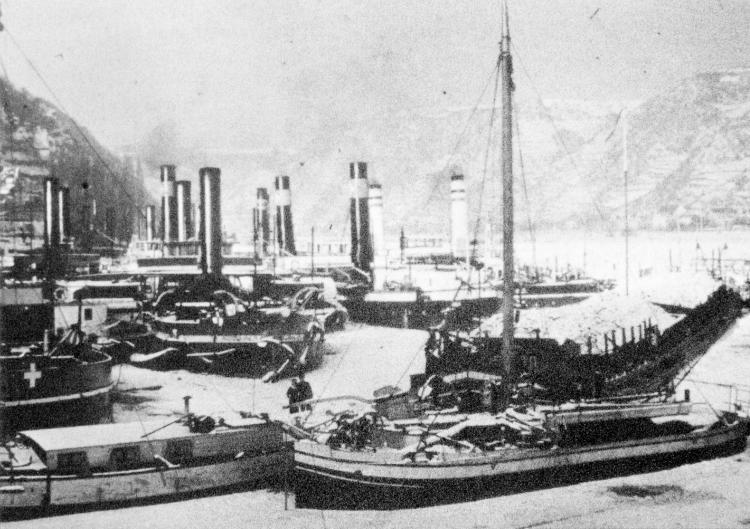
Strong erosion phenomena made securing the banks and the harbor area necessary in the 19th century. In 1858, work began on delineating the harbor against the Rhine. The resulting Rheinfelshafen significantly expanded the area available for docking. The demand was great, and the harbor mole provided the ships with protection from ice during the winter. The Rheinfelshafen extended upstream almost to the city boundary.
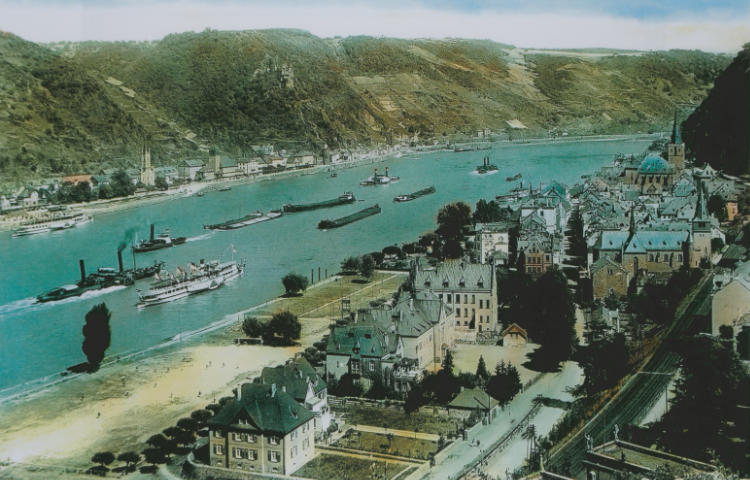
Around 1880, the downstream part of the harbor was deepened to meet the requirements of modern shipping; the part of the harbor near the city was filled in to create more residential space. Here, the town hall (1881), the magistrate’s court building (1899), in which the prison was also housed, and the municipal school (1904) were built.