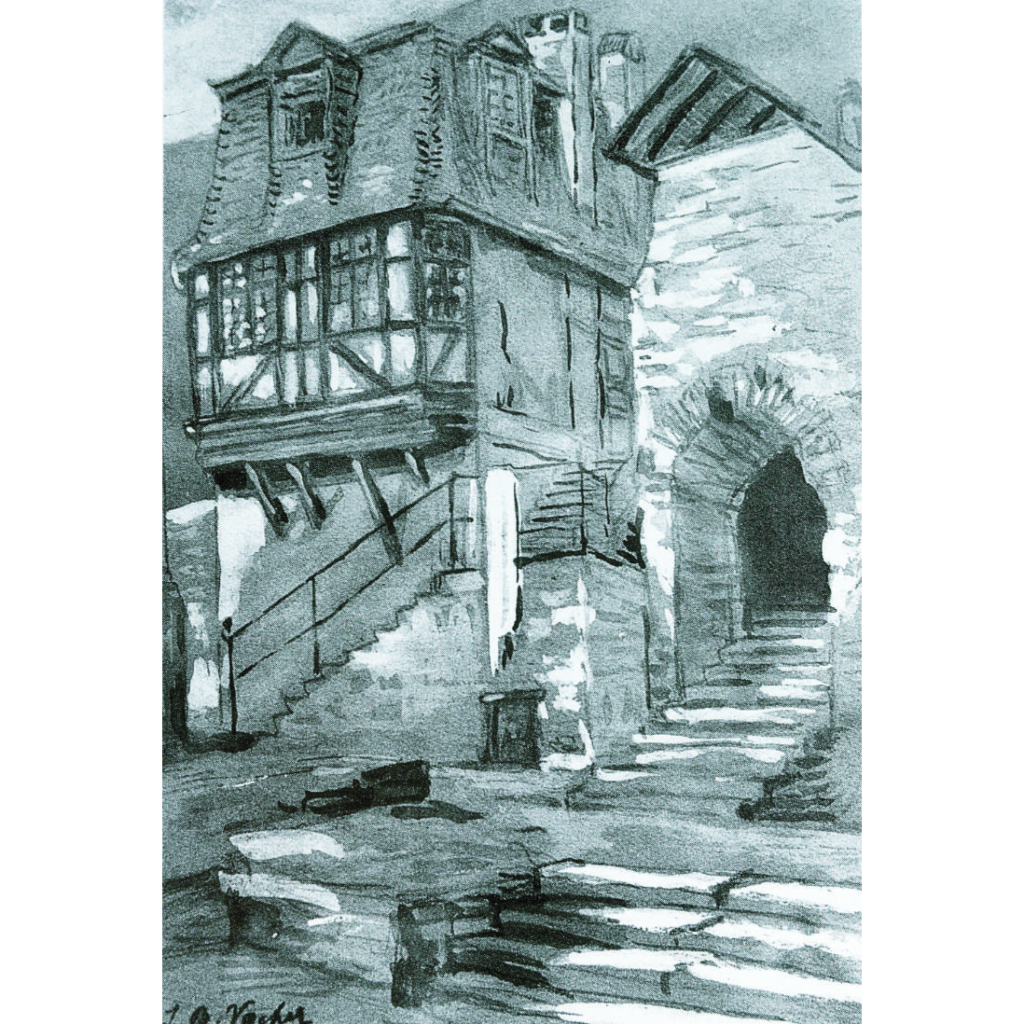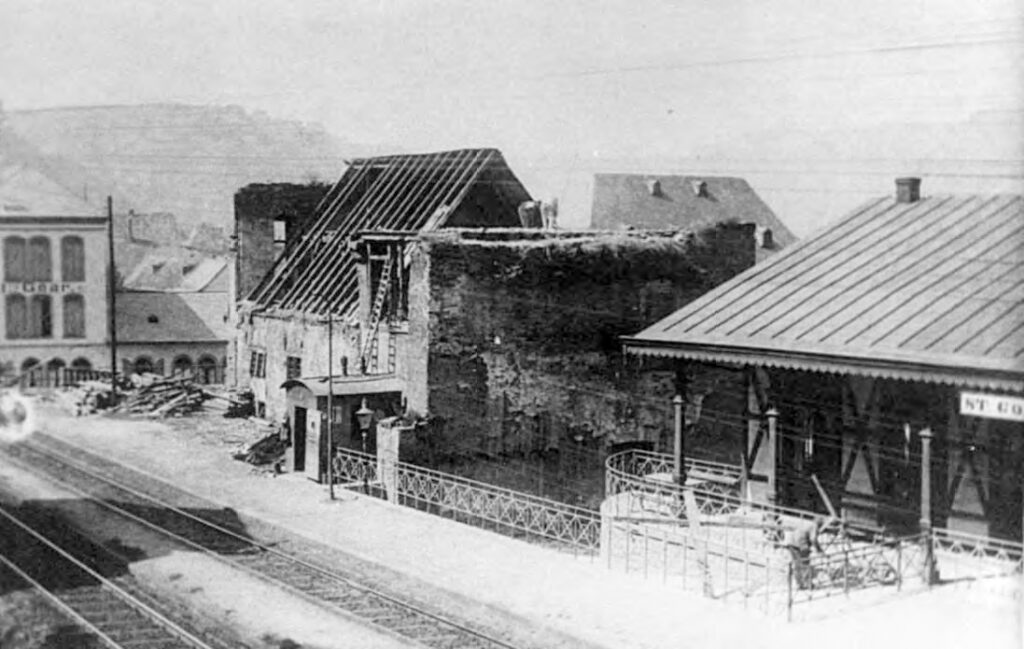
Where the St. Goar train station stands today, there once stood the Palatium, the castle of the Counts of Arnstein. As early as the 10th century, the counts appointed as voivodes by the monks of Prüm built the castle as a residence and to secure their claim to power. After the extinction of the Arnsteiner line, the counts of Katzenelnbogen inherited the Palatium and the rule over St. Goar in 1190. The construction of the St. Goar Rheinzoll was carried out under the protection of the castle at the beginning of the 13th century. With the construction of the Höhenburg Rheinfels in 1245, the Palatium lost its importance. When the Katzenelnbogen surrounded the city with a city wall in the 14th century, the castle was integrated into the fortification system.
As late as 1848, parts of the castle remained intact. These remains were largely demolished during the construction of the railway line in 1856. The extension of the railway station in 1909 destroyed further remnants of the castle complex. Today, only the last fragments of the palace, the St. Goar Castle of the Arnstein Grafen, remain preserved within the walls of the freight depot.
The reformed parish house once stood on the site of today’s reception building of the St. Goar train station. After it was destroyed by a fire, the first station with an attractive half-timbered facade was built in its place during the construction of the railway line in 1859. On October 26, 1859, a train first passed through St. Goar; on December 12, 1859, the new railway line was officially opened.