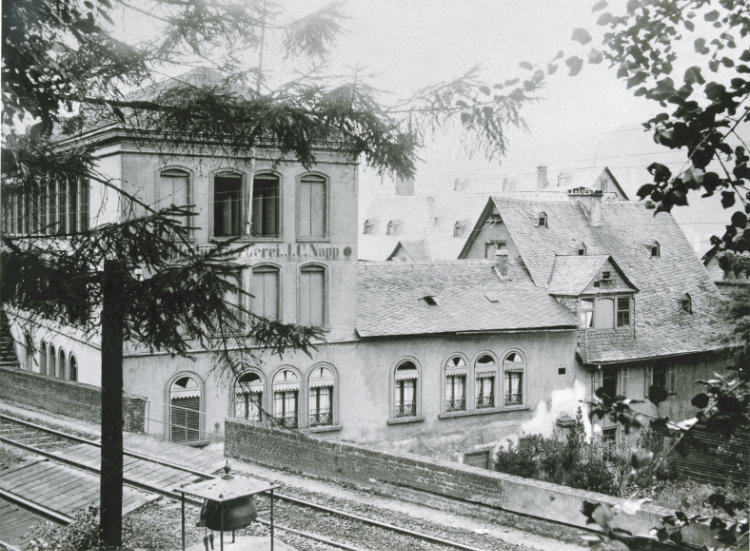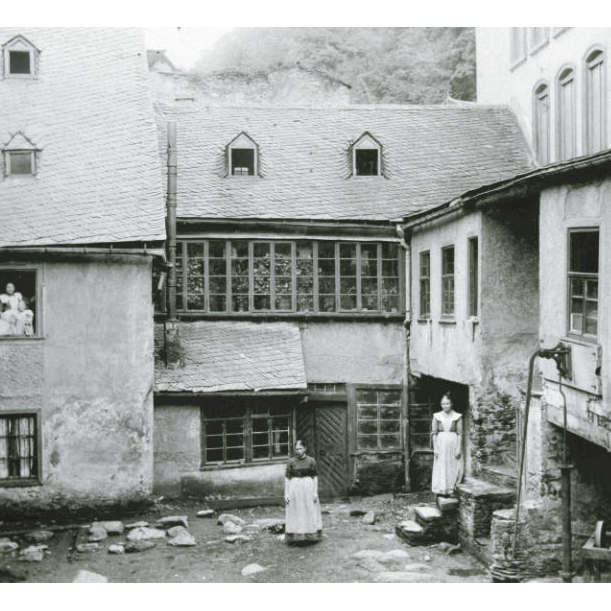
Livestock, oak forests and water were for centuries the prerequisite for a successful agricultural economy. Leather industry, which perfectly suited the city of St. Goar. The cattle grazed on the meadows along the Rhine and in the side valleys; the oak forests extended on the steep slopes of the Rhine right up to the city limits, and water flowed to the city through various side streams. Therefore, for several centuries Sawmills one of the Main sources of income for the city. The hides of the animals were processed into leather by the tanners using the loes extracted from oak bark under constant irrigation. The dried hides were dried in the loes storage tanks, which for centuries shaped the cityscape as powerful buildings. The St. Goar leather goods were transported by ships and later by rail and enjoyed an excellent reputation.
Here settled the Napp family around 1780 with its weaving mill, which built up large parts of the old cemetery that had been dissolved shortly before. The Wocherbach, which flows through the town here, has since also been named Lohbach, because with its water it Napp's Lohgerberei provided for. Directly on Oberstraße stood the family’s representative residence, the still-standing house of Napp. With the discovery of synthetic tannins and the introduction of chrome dyeing, the St. Goar leather industry lost its importance; in the twenties of the last century, the last companies closed their operations.