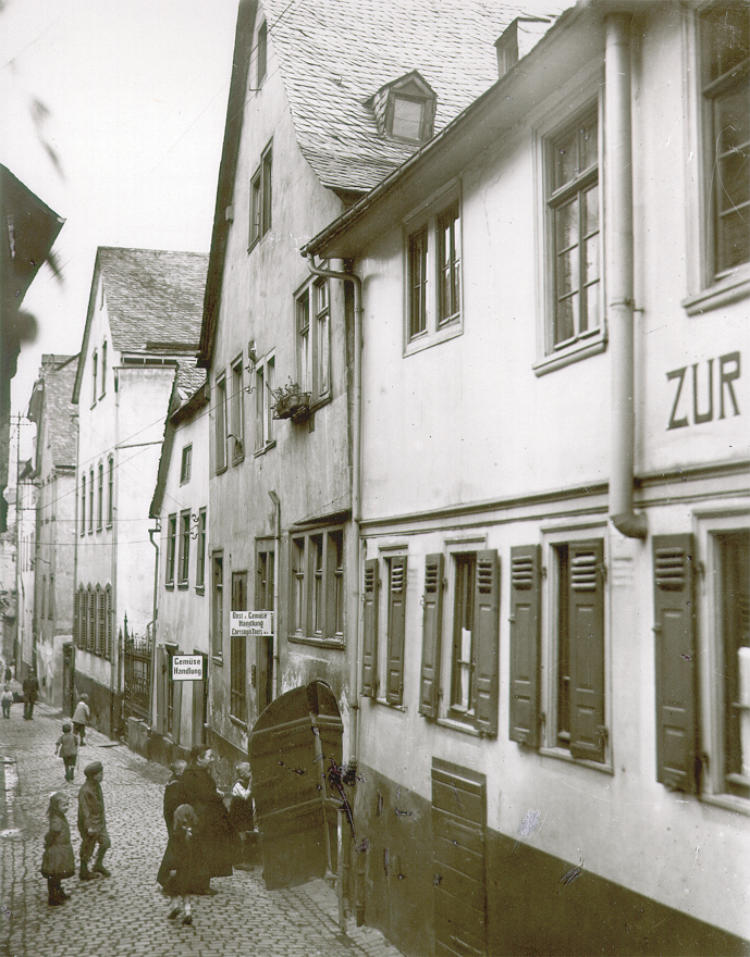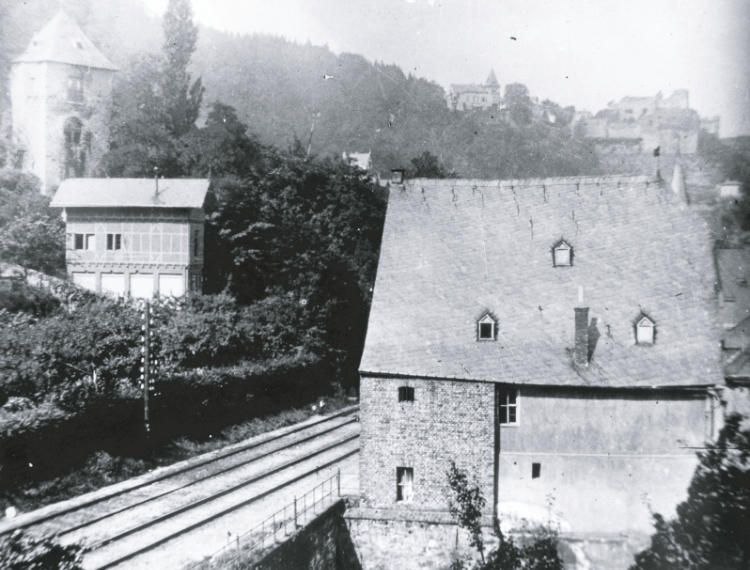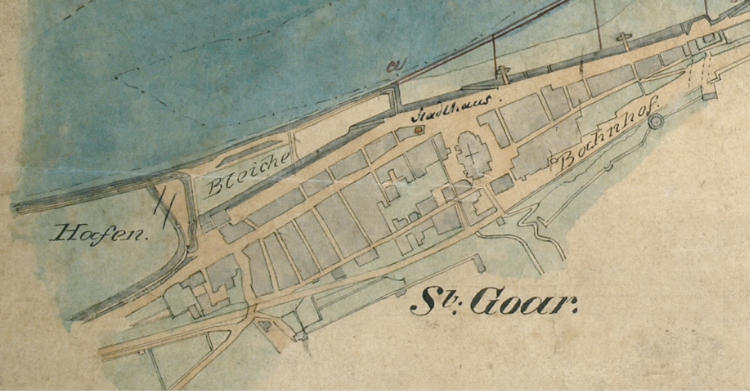
The cityscape of St. Goar is characterized by the two roads that run parallel to the Rhine, the Heerstraße and the Oberstraße. Originally, these were called Lower and Upper Streets.Although Heerstraße is the direct extension of the historic Fernstraße (main road) that dates back to Roman times in the Rhine valley, the Oberstraße initially developed into the St. Goar main road. The reason was the rising waters of the Rhine, which made the Lower Road impassable at times. After the Unterstraße (lower road) was upgraded to Heerstraße, it took on the function of a main road.
The representative house, which until 2024 housed the Doll and Bear Museum, has a long and eventful history. The coat of arms on the front of the house shows the House brand Heinrich Goedeckes, which, around 1700, was a successful Wine retail companies justified. This period also includes the Impressive cross-vaulted cellar under the house. After the wine trade was moved to the surrounding buildings, the house served as a temporary warehouse. Prison, as Girls' school and as Spritzenhaus of the St. Goar fire department.
On the hillside of the street, on the area that is now used as a garden, was the city's police station. The well-guarded ground floor housed the prison until 1899, which is why the house came to be known as Bolles in the local vernacular.